Xpeng's VLA 2.0: How Tesla's Self-Driving Edge Is Fading
In a recent test drive of Xpeng's VLA 2.0 autonomous driving system through the chaotic streets of Beijing, I experienced a remarkable milestone: zero interventions over 40 minutes of intense traffic. While Tesla has long dominated the self-driving narrative, Xpeng's latest update proves that the gap is narrowing—and in some scenarios, it may already be closed. Below, we dive into the key questions about this groundbreaking system.
What is Xpeng VLA 2.0?
Xpeng VLA 2.0 is the latest generation of the Chinese automaker's advanced driver-assistance system. VLA stands for Vision, Language, and Action—a multimodal AI that interprets visual input, processes natural language commands, and controls vehicle actions accordingly. Unlike earlier versions that relied heavily on pre-mapped routes, VLA 2.0 uses real-time sensor fusion and deep learning to handle complex urban environments. It can detect pedestrians, cyclists, erratic drivers, and even temporary road changes without human intervention. The system is designed to work in cities with some of the most aggressive driving conditions, such as Beijing's notorious traffic, making it a direct competitor to Tesla's Full Self-Driving (FSD) pack.
How does VLA 2.0 compare to Tesla FSD?
While Tesla FSD remains a benchmark, Xpeng's VLA 2.0 is narrowing the gap quickly. Key differences include:
- Geographic focus: Tesla's FSD is optimized for North American roads, while Xpeng tailors VLA 2.0 to China's chaotic urban traffic.
- Processing approach: VLA 2.0 combines lidar, cameras, and radar, whereas Tesla relies solely on cameras (vision-based). This gives Xpeng an edge in low-light or adverse weather.
- Decision-making speed: In my test, VLA 2.0 reacted faster to sudden cut-ins and pedestrians darting across lanes—traits that Tesla's system sometimes struggles with.
- Intervention rates: I completed a 40-minute drive in central Beijing without a single intervention; comparable Tesla FSD drives often require multiple corrections.
Overall, VLA 2.0 doesn't just copy Tesla—it innovates on localization and sensor fusion, making it a serious contender.
How did the test drive actually work?
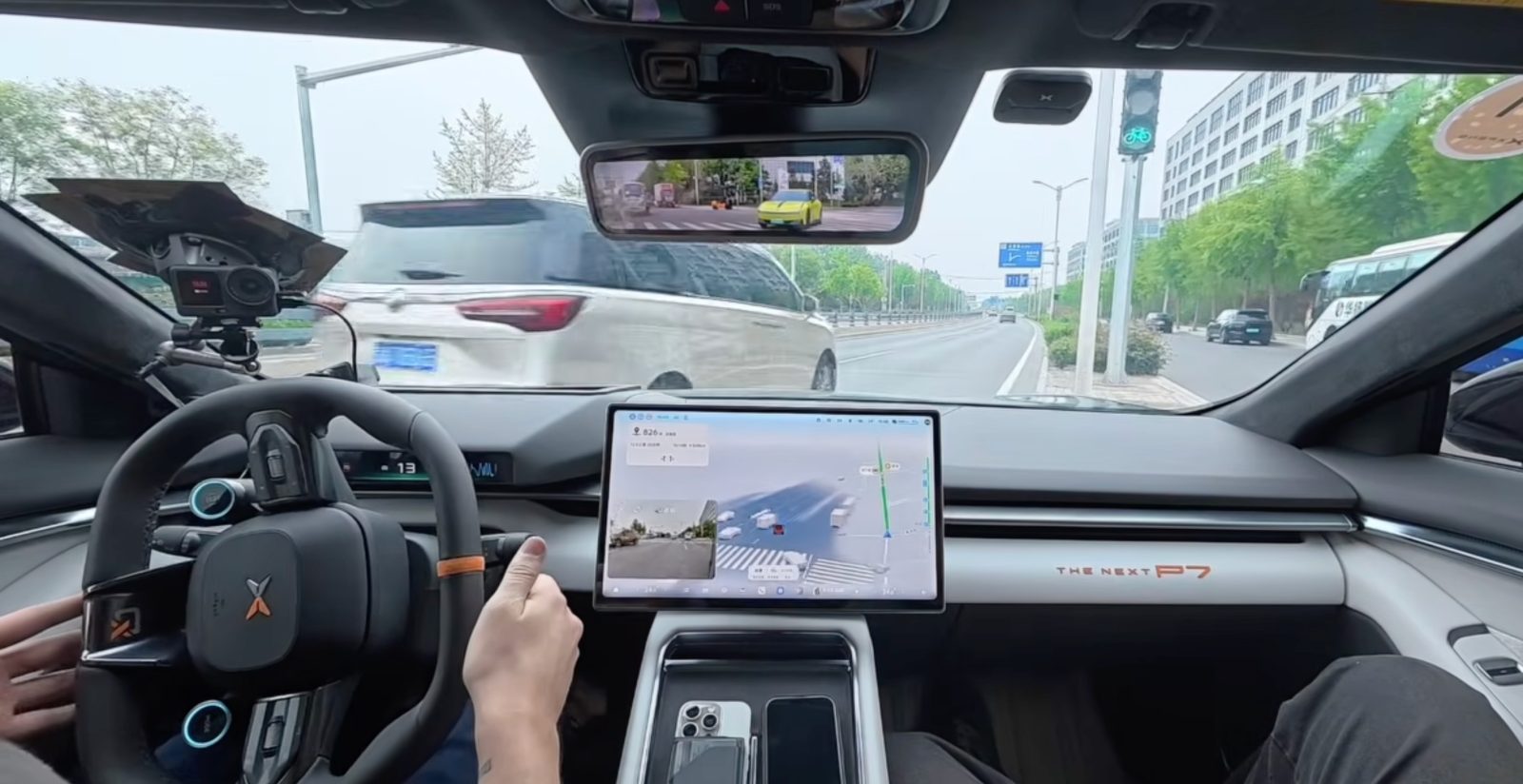
The test took place on a busy weekday morning in Beijing's business district. I sat in the driver's seat of an Xpeng G9 equipped with VLA 2.0, but did not touch the wheel or pedals for 40 minutes. The system handled:
- Lane changes in heavy traffic without hesitation.
- Unprotected left turns across multiple lanes of oncoming traffic.
- Interaction with scooters and bicycles weaving unpredictably.
- Construction zones with temporary barriers that weren't on any map.
Throughout the drive, the car's displays showed its real-time reasoning—highlighting detected objects, predicting their paths, and deciding on safe actions. The result was a steady, confident ride that felt both safe and efficient.
What makes Beijing traffic so challenging for autonomous systems?
Beijing is one of the most aggressive driving environments globally. Drivers frequently ignore lane markings, scooters weave through traffic, and pedestrians cross anywhere. Traditional driver-assist systems struggle with such randomness because they rely on predictable behavior models. VLA 2.0 overcomes this by:

- Continuous learning from real-world data across Chinese cities.
- Fine-grained sensor fusion to detect even small objects (like a child running out from behind a truck).
- Risk-prediction algorithms that prioritize safety over speed.
Successfully navigating this environment without human intervention shows a level of robustness that even Tesla's FSD hasn't fully achieved in similar conditions.
How is Xpeng VLA 2.0 trained?
Xpeng uses a combination of simulation and real-world data from its fleet of over 400,000 vehicles. The VLA 2.0 model is trained using deep reinforcement learning, where the AI runs millions of scenarios in a virtual environment before being deployed. Additionally, the system leverages a large language model (LLM) to understand context—like recognizing a traffic police hand signal or a temporary detour sign. This multimodal approach allows VLA 2.0 to adapt to novel situations faster than systems that only process visual cues. Regular over-the-air updates ensure that the AI improves continually based on new edge cases encountered by the fleet.
When will VLA 2.0 be available to customers?
Xpeng has started rolling out VLA 2.0 via over-the-air updates to owners of G9, P7, and G6 models in China, with a phased release based on region. Initially, the system is limited to major cities like Beijing, Shanghai, and Guangzhou, but Xpeng plans to expand to 50+ cities by the end of the year. Pricing is included in the vehicle's optional XPILOT subscription, which is significantly cheaper than Tesla's FSD package. No official timeline for international markets exists yet, but the company has hinted at European launches in 2025.
What does this mean for the future of self-driving cars?
The success of Xpeng VLA 2.0 signals a shift: Tesla is no longer the sole pacesetter. Chinese automakers have access to massive local data and are innovating faster in perception and decision-making. This competition will drive down costs, force transparency in safety metrics, and accelerate regulatory approvals. For consumers, the immediate benefit is a more capable and affordable driver-assist system. In the long term, as VLA 2.0 and similar systems prove their reliability, we may see Level 4 autonomy in specific urban zones sooner than many predicted. The race is now—and Xpeng has just leaped ahead.