How to Teardown and Analyze a Disposable Emergency Phone Charger: Inside the ChargeTab
Overview
Modern smartphones are notorious for their battery anxiety—Murphy’s Law ensures your phone dies when you need it most. The ChargeTab emergency phone charger promises a cheap, single-use solution: a $10 device you stash in your car or bag, ready to deliver a full charge exactly once. But what’s really inside this disposable charger, and is its eco-friendly claim genuine? This tutorial guides you through a teardown of the ChargeTab, revealing its internal components, identifying the key chips, and evaluating its environmental footprint. Whether you’re a curious tinkerer or a green tech advocate, you’ll learn how to safely dismantle and analyze this gadget while understanding its place in the world of single-use electronics.
Prerequisites
Before you start, gather these tools and materials. The teardown is simple but requires care to avoid damaging components or yourself.
- ChargeTab unit (preferably a used or spent one)
- Scissors (sharp, to cut the paper shell)
- Small flathead screwdriver (for prying, if needed)
- Multimeter (to verify battery voltage)
- Loupe or magnifying glass (to read tiny markings)
- Camera or smartphone (to document steps)
- Antistatic mat or work surface (optional but recommended)
- Datasheet access (internet or PDF reader for the IC)
Note: The ChargeTab is designed as a non-rechargeable, sealed unit. Once opened, it cannot be reassembled. This teardown is educational; do not expect to reuse the device.
Step-by-Step Teardown and Analysis
Step 1: Examine the Exterior
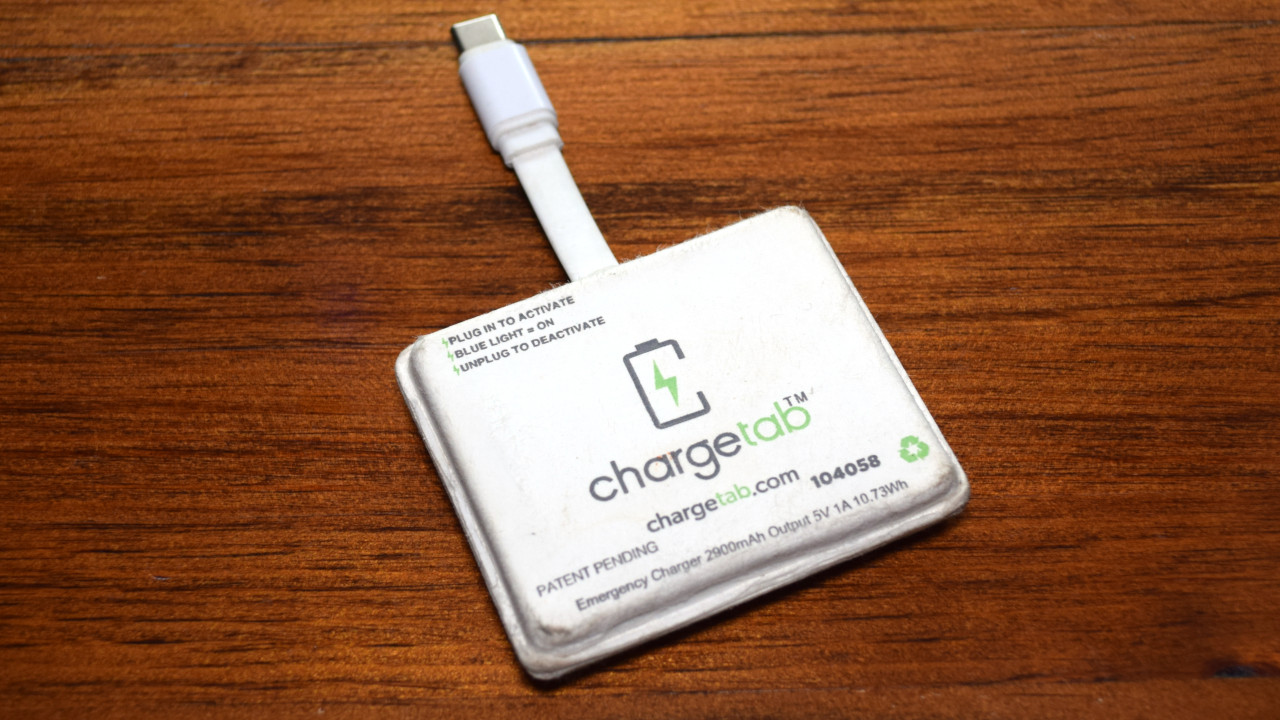
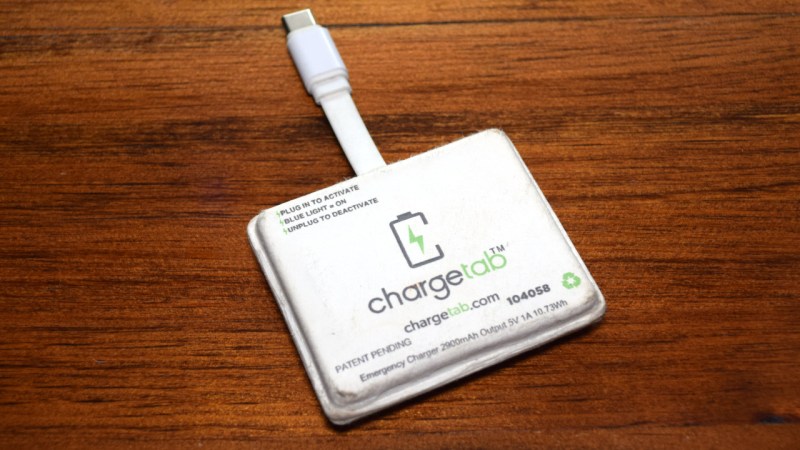
Hold the ChargeTab and note its unique paper enclosure. Unlike most electronics that rely on plastic or metal, ChargeTab uses a biodegradable paper shell. This is part of their eco-friendly branding. Check for any seams or printing—there’s no access panel; the unit is sealed. The paper is surprisingly sturdy but can be cut easily.
Step 2: Cut Open the Paper Shell
Using your scissors, make a careful incision along one of the longer edges. Because the shell is paper, it will tear or cut like thick cardboard. Avoid piercing the interior pouch battery. Once opened, you’ll reveal the internal components: a large LiPo pouch battery and a small PCB. The battery occupies most of the volume. The PCB holds only a few parts.
Step 3: Remove the PCB and Battery
Gently lift the PCB out; it’s probably attached to the battery tabs or glued lightly. The battery is a chunky LiPo cell marked YL 104058. Note its capacity rating—2,900 mAh—and the date code 2017. (Yes, this unit was manufactured years ago.) The PCB contains: an SOIC-8 IC, a tiny inductor, two small ceramic capacitors, and a single LED. There’s no USB‑C or micro‑USB port—the charger uses a built-in USB‑A male connector. The circuit is minimal.
Step 4: Identify the IC
Look closely at the 8-pin IC using your loupe. The markings read HT4928S. This is a HotChip HT4928S—a single-cell Li‑ion battery charger/power management IC. Dig up the datasheet online: http://www.lii.com (fictional URL used for illustration; search for actual datasheet). The HT4928S integrates constant-current constant-voltage (CC/CV) charging, a boost converter to output 5V, and protection features like over-discharge and short-circuit. It’s a low-cost all‑in‑one solution for disposable power banks.
Step 5: Analyze Supporting Components
Using the datasheet or a multimeter, you can identify the other parts:
- Inductor (typically 2.2 µH or 4.7 µH) works with the IC’s internal switch to step up battery voltage (3.7 V nominal) to 5 V output.
- Capacitors (e.g., 10 µF each) smooth input and output ripple.
- LED (single color) indicates charging status—likely on when the battery is delivering power.
There are no USB ID resistors, no fuel gauge, and no charge enable logic. It’s a bare‑bones design.
Step 6: Review the Environmental Claims
Now that you’ve seen the components, evaluate the company’s “green” story. ChargeTab states the internal battery was diverted from landfills, and the paper casing is biodegradable. They also offer a free return label to send back spent units for refurbishment. However, the date code 2017 suggests these units may sit on shelves for years. The non‑rechargeable nature means each ChargeTab produces e‑waste—even if ultimately recycled. Consider the lifecycle: a single‑use 3,000 mAh battery compared to a reusable power bank that can be charged hundreds of times. The environmental benefit is questionable, but the low cost and emergency use case may justify the trade‑off for some users.
Common Mistakes to Avoid
- Cutting too deeply: The battery is directly under the paper. A slip could puncture the LiPo pouch, causing smoke or fire. Use scissors carefully and avoid forcing the blade.
- Ignoring battery date codes: Old batteries may have higher internal resistance or reduced capacity. The 2017 date indicates potential self‑discharge.
- Misidentifying the IC: The markings can be faint. Use good lighting and magnification. The HT4928S is not the same as similar‑numbered parts from other vendors.
- Assuming the paper shell is fully eco‑friendly: Biodegradable paper alone doesn’t make a product green if the internal electronics are not recoverable or contain hazardous materials. Check the battery type and tin‑lead solder (if any).
- Expecting to reuse the device: Once the battery is drained, the ChargeTab is dead. Attempting to recharge it could be dangerous as the IC is designed only for one‑shot discharge.
Summary
This teardown of the ChargeTab emergency phone charger reveals a remarkably simple design: a 2,900 mAh LiPo battery, a HotChip HT4928S charger/boost IC, and a few passives, all wrapped in a biodegradable paper shell. The company’s recycling program is noteworthy, but the single‑use nature and old battery date raise questions about overall sustainability. For tech enthusiasts, the teardown is a quick lesson in low‑cost power management. Whether you see it as a necessary emergency tool or an environmental problem, the ChargeTab is a fascinating example of disposable electronics.