Navigating the Post-Quantum Cryptography Shift: 10 Key Insights from Meta's Migration Journey
As quantum computing edges closer to reality, the cryptographic foundations that protect our digital world face an unprecedented challenge. Organizations everywhere must pivot to post-quantum cryptography (PQC) to safeguard sensitive data—not just for tomorrow, but against today's 'store now, decrypt later' threats. Meta, with billions of users relying on its platforms, has been proactively migrating its internal infrastructure. Here are 10 essential insights from their journey, offering a practical framework for any organization embarking on this complex transition.
1. The Quantum Threat Is Real—and Urgent
Quantum computers, once fully realized, will break current public-key encryption methods like RSA and ECC. Experts estimate this could happen within 10–15 years. But the danger is already present: adversaries can hoard encrypted data today, waiting to decrypt it later—a tactic known as 'store now, decrypt later' (SNDL). This means any sensitive information transmitted today could be exposed in the future. Meta emphasizes that organizations cannot afford to delay; proactive migration is essential to protect long-term data confidentiality. Understanding the timeline is the first step to prioritizing PQC readiness.

2. The 2030 Deadline: A Critical Milestone
Both the US National Institute of Standards and Technology (NIST) and the UK's National Cyber Security Centre (NCSC) have issued migration guidance targeting 2030 as a key date for transitioning critical systems to post-quantum cryptography. This timeline accounts for the complexity of replacing cryptographic infrastructure at scale. Meta's experience shows that starting early allows for thorough risk assessment, inventory, and testing—avoiding a costly rush later. The 2030 goal isn't just a suggestion; it's a strategic benchmark for adopting new standards before quantum threats materialize.
3. NIST Standards Are Here—Meta Helped Shape Them
NIST has published the first industry-wide PQC standards: ML-KEM (Kyber) for key encapsulation and ML-DSA (Dilithium) for digital signatures. A third algorithm, HQC, is on the way—and notably, Meta cryptographers are co-authors of HQC. This reflects Meta's deep commitment to advancing global cryptographic security. These algorithms provide robust defenses against SNDL attacks and are being adopted across industries. Organizations should begin evaluating these standards now, as they form the foundation for migration.
4. Meta’s Proactive Migration: Start Small, Scale Fast
Meta has already deployed post-quantum encryption across its internal infrastructure over a multi-year process. Their approach? Start with non-critical, low-risk systems to build expertise and confidence, then accelerate to high-risk areas. This phased method reduces operational disruption and allows teams to refine processes. Meta's massive scale—serving billions—requires meticulous planning. Their lesson: don't wait for perfect standards; begin with what’s available and iterate. Their migration levels framework can help others structure this journey.
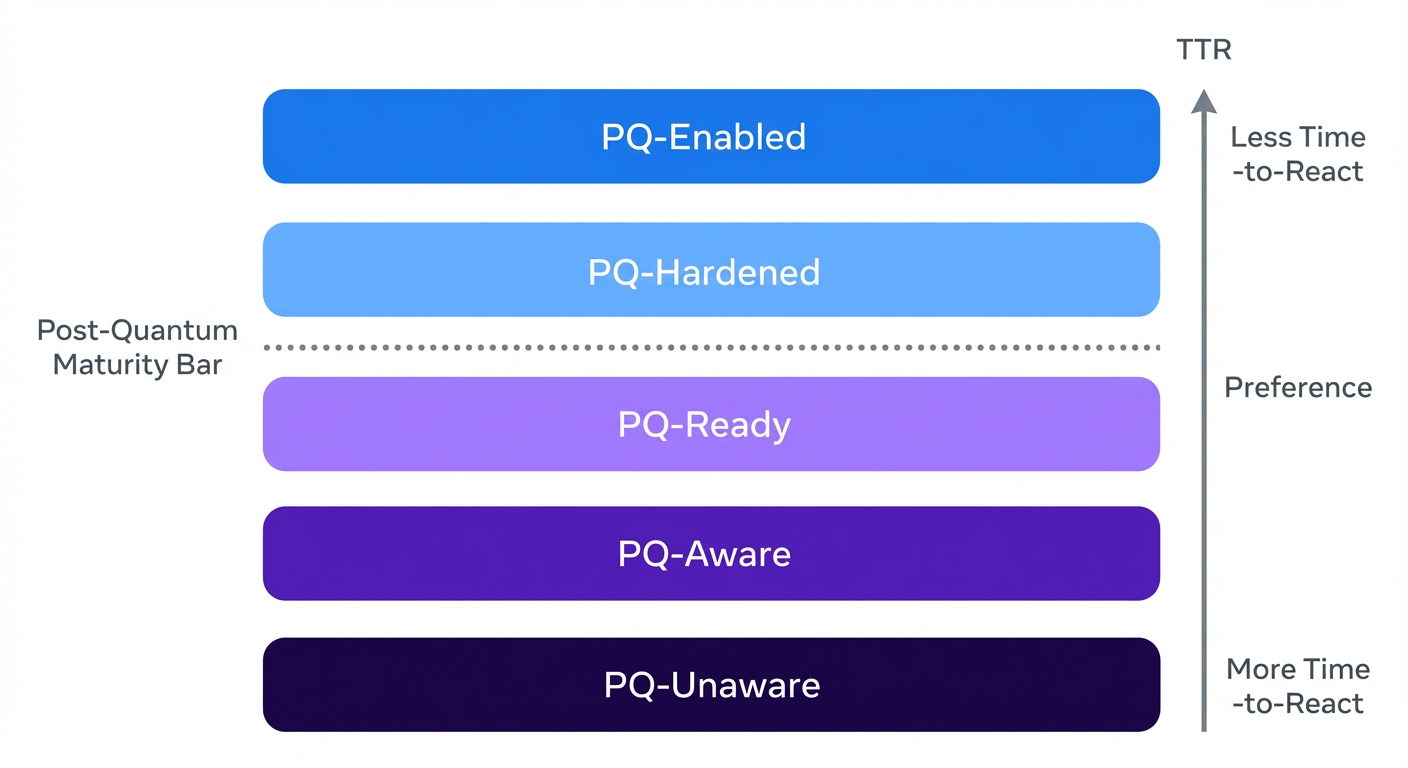
5. Introducing PQC Migration Levels: A Structured Framework
Managing PQC migration across diverse use cases is complex. Meta proposes a 'PQC Migration Levels' concept—similar to capability maturity models—to help teams prioritize and measure progress. Level 1 might focus on inventory and risk assessment, while Level 5 represents full post-quantum deployment with automated monitoring and rollback. This framework allows organizations to tailor efforts to their specific risk profile, resources, and technical debt. It's a pragmatic tool for turning a daunting transition into manageable steps.
6. Step One: Comprehensive Risk Assessment and Inventory
You can't protect what you don't know. Meta’s first step was a thorough inventory of all cryptographic assets—libraries, protocols, certificates, and hardware. They assessed which systems handle long-lived secrets (like personal data or authentication keys) that are vulnerable to SNDL. Risk assessment then determined priority: high-priority systems (e.g., those protecting user data) get faster migration. This upfront work prevented surprises later and ensured resources were allocated efficiently. Deployment only works when the foundation is solid.
7. Deployment with Guardrails: Safety Nets for Complex Systems
Rolling out PQC across a vast infrastructure like Meta’s required guardrails to prevent outages or security gaps. They implemented circuit breakers that could revert to classical crypto if performance degraded, and deployed hybrid modes (classical + PQC) during transition. Monitoring and alerting systems tracked key metrics like handshake failure rates. This safety-first approach allowed gradual, confident rollout. Meta emphasizes that guardrails aren't optional—they're essential for managing the complexity of heterogeneous environments.
8. Tackling Complexity and Missing Capabilities
No organization has a homogenous environment. Meta encountered missing or incomplete PQC support in legacy systems, third-party libraries, and hardware. Their solution involved close collaboration with vendors, internal patch development, and sometimes building bespoke wrappers. They also contributed to open-source projects to accelerate ecosystem readiness. Key takeaway: expect gaps and plan contingencies. Lessons from these challenges can save others time and frustration.
9. Efficiency and Economy: Do More with Less
PQC migration is resource-intensive, but Meta found ways to make it efficient. By reusing shared cryptographic modules across teams, avoiding redundant efforts, and automating testing pipelines, they reduced costs. They also prioritized algorithms that offer good performance trade-offs, like ML-KEM for key exchange. Their economic lesson: invest early in tooling and automation, and treat migration as a platform-level initiative rather than a series of one-off projects. This mindset is crucial for scaling across the industry.
10. Accelerating the Community: Sharing Insights for a Collective Future
Meta’s ultimate goal is to help the broader community navigate the PQC transition effectively and economically. By publishing their framework, lessons, and even contributing to algorithm design (HQC), they aim to raise the baseline of global cryptographic security. They encourage other organizations to share their own experiences, collaborate on standards, and participate in open-source efforts. The post-quantum future will be built collectively—and starting now, with transparency and cooperation, is the best defense against tomorrow’s threats.
Conclusion: The shift to post-quantum cryptography is one of the most critical infrastructure transformations of our time. Meta’s journey shows that with a structured approach—starting with risk assessment, using migration levels, deploying guardrails, and sharing knowledge—organizations can navigate this transition successfully. The key is to start now, even if the path seems complex. By taking proactive steps today, we can protect tomorrow's data from the quantum threat.