Harnessing Hamster Wheel Energy for Phone Charging: A DIY Guide
Overview
Hamsters, with their fluffy charm and nervous energy, are beloved pets despite their short lifespans and persistent squeaking. But what if those tiny paws on a wheel could do more than just burn off energy? By converting the frantic motion of a hamster running on its wheel into electrical power, you can charge mobile devices—turning your pet into a miniature, furry power plant. This guide, inspired by [Flamethrower]'s hamster wheel–powered generator, walks you through building a similar system.
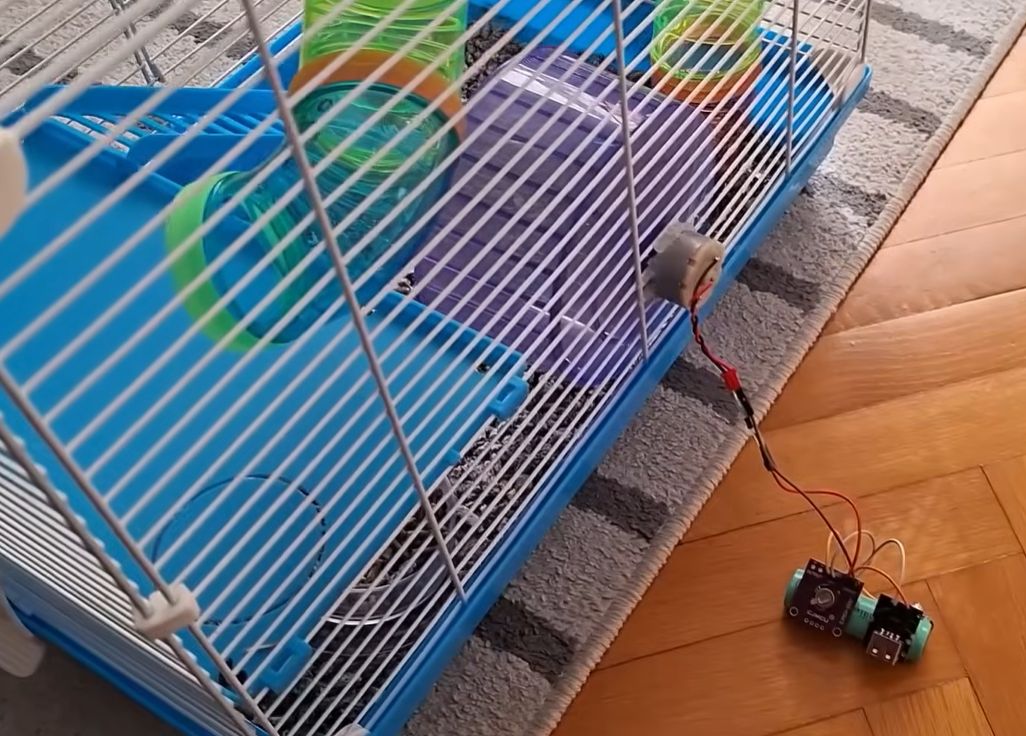
The key challenge is the irregular pacing of the hamster—they sprint, pause, and vary speed. This calls for an energy-harvesting approach rather than a steady generator. The TI BQ25770-based CJMCU-2557 module is perfectly suited: it accepts input voltages from 0.1 V to 5.1 V after a cold start at 0.6 V, and can handle currents up to 0.1 A. The module includes a supercapacitor for storage, and you can also charge a connected battery—[Flamethrower] used salvaged 18650 Li-ion cells. After a night of hamster exercise (on a wheel that was admittedly too small), enough charge accumulated to start a smartphone. We'll detail how to replicate this and what to watch out for.
Prerequisites
Before diving in, gather the following components and tools:
- CJMCU-2557 module (featuring TI BQ25770) – the core energy-harvesting IC
- Supercapacitor – the module usually comes with one; verify rating (e.g., 1 F at 5.5 V)
- 18650 Li-ion cells – salvaged or new, with appropriate protection circuits
- Hamster wheel – choose a large diameter (at least 8 inches) for efficiency; original used too small a wheel
- Small DC generator – e.g., a geared motor that acts as a generator when spun by the wheel
- Wires, connectors, and solder
- Multimeter for testing voltages and currents
- USB charging cable (or phone) to test output
Optionally, add a low-power voltage regulator or boost converter if your final output doesn't match the module's specs.
Step-by-Step Instructions
1. Understand the Energy-Harvesting Circuit
The BQ25770 is a highly integrated buck-boost converter designed for energy harvesting with ultra-low-voltage startup. It efficiently converts the erratic output from the generator into a stable voltage to charge a supercapacitor or battery. The CJMCU module breaks out the necessary pins: input (from generator), supercapacitor connections, battery terminals, and output (for your phone). Note the cold-start requirement: the input voltage must reach at least 0.6 V momentarily to wake the IC.
2. Assemble the Generator-Wheel Interface
Attach a small DC motor (used as a generator) to the hamster wheel's axle. Ensure the motor's rotor spins freely as the wheel turns. The voltage and current generated will vary with wheel size and hamster speed. For a larger wheel (recommended), you'll get more consistent and higher output. Solder leads to the motor terminals and connect them to the input pins of the CJMCU module (typically marked “IN” or “PVIN”). Polarity may matter, but the module often includes a rectifier; check the datasheet.
3. Connect the Supercapacitor and Battery
The supercapacitor stores the harvested energy as a buffer. Connect it to the module’s designated “SCAP” or “SUPERCAP” pads. Then connect the 18650 battery (with protection circuit) to the “BAT” terminals. Many modules include a charging management feature for lithium cells. If your module doesn't, add a dedicated Li-ion charger between the output and battery.
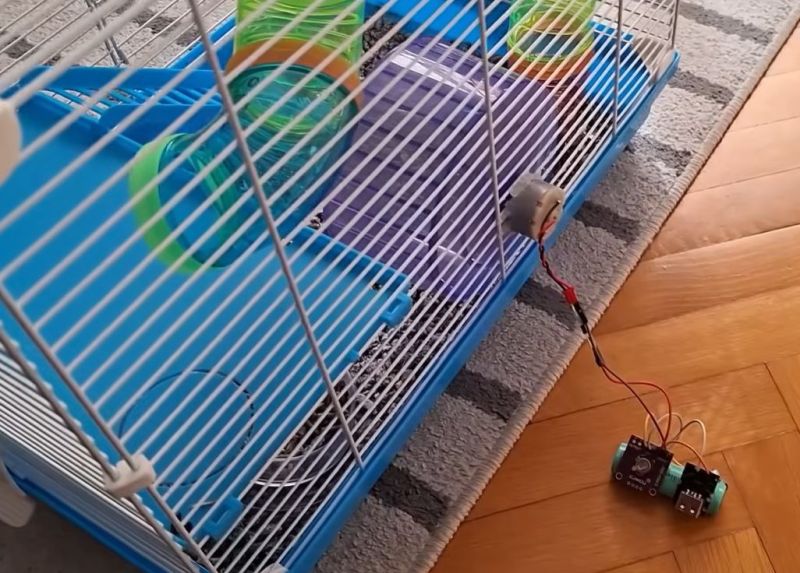
4. Wire the Output for Phone Charging
Most phones require 5 V via USB. The module's output might be adjustable; set it to 5 V if possible, or add a boost converter. Connect a USB breakout board to the output pins. Be sure to include a current-limiting resistor (or let the phone's charging circuitry handle it).
5. Test and Calibrate
Before letting the hamster run, test the circuit with a hand-cranked generator or drill to simulate the wheel. Measure voltage at supercapacitor and battery terminals. Ensure the module starts up correctly (green LED often indicates power good). Once verified, attach the wheel to the hamster cage and let your pet exercise for several hours or overnight. Monitor the battery voltage; it should slowly rise. Finally, plug in a phone or a USB power meter to see how much charge is available.
Common Mistakes
- Using too small a wheel – Small wheels force the hamster to run inefficiently and produce very little power. A wheel with a diameter of at least 20 cm (8 inches) is strongly recommended.
- Ignoring cold-start voltage – If the generator never reaches 0.6 V, the module won't wake. Make sure the motor can output that voltage at typical wheel speed.
- Overcharging the 18650 cell – Without proper protection or charging control, the cell can be overcharged and become dangerous. Always use a BMS or integrated module that limits voltage to 4.2 V.
- Using the wrong supercapacitor – The module expects a specific capacitance and voltage. Using a much larger cap may slow charging too much; using a smaller one may not smooth the output.
- Neglecting hamster safety – Ensure all wires are out of reach, the wheel runs smoothly, and the hamster cannot be injured by spinning parts. Never force the animal to run.
Summary
This guide demonstrated how to turn a hamster wheel into an energy source for charging a smartphone. By leveraging the CJMCU-2557 module (BQ25770) and a large wheel, you can harvest the erratic motion of your pet. The system requires careful component selection—especially the wheel size—and attention to electrical safety. While one night of running may only provide a partial charge, scaling up with multiple hamsters or a more efficient generator could yield better results. As [Flamethrower] hinted, future improvements include detailed measurements and a larger wheel. Enjoy your sustainable, furry power source!